India’s telecom regulator has decided that spam-blocking apps don’t get to keep their spam data to themselves anymore.
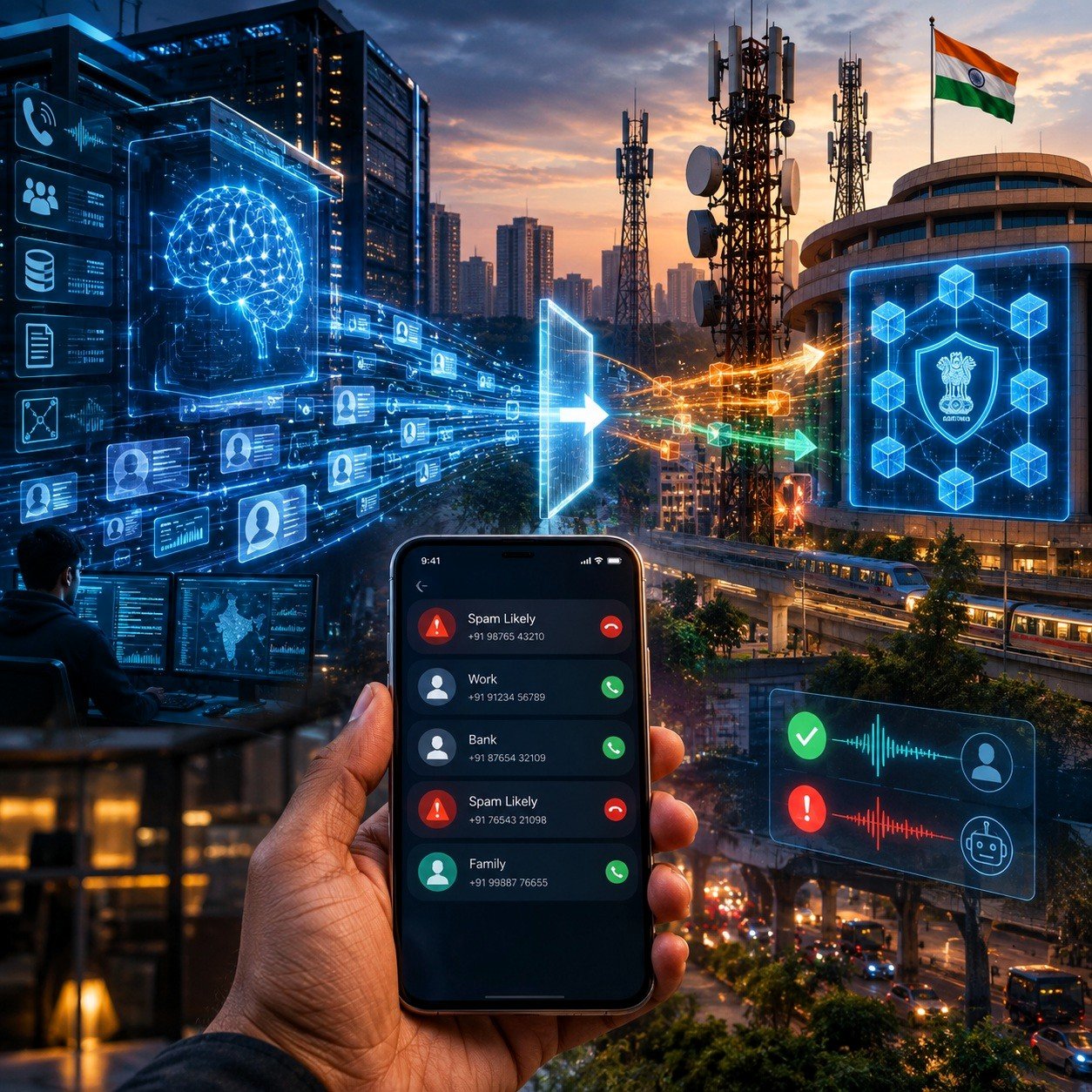
On Friday, the Telecom Regulatory Authority of India (TRAI) amended its commercial communications rules to require caller-ID and call-management apps, the Truecallers and Bharat Caller ID and Anti-Spams of the world, to funnel user spam reports into a blockchain-based platform that telecom operators already run to track and act on unwanted calls. The stated goal is straightforward enough: more spam reports flowing into one system means a bigger dataset for going after spammers. What TRAI didn’t mention, at least not directly, is that this also means handing telecom operators a look at the classification work that apps like Truecaller have spent years (and a lot of AI training) building.
Truecaller isn’t having it. The company told TechCrunch the new rule amounts to a “one-way exchange” and called it anti-competitive, which is a polite way of saying the regulator just asked it to give away something valuable for nothing in return. And it is valuable. India is Truecaller’s largest market by a wide margin, home to more than 350 million of its 500 million-plus monthly users worldwide. In its own reporting, the company said Indian users encountered roughly 42 billion spam calls in 2025, of which it managed to block about 12 billion. That kind of scale is exactly what makes its crowd-sourced, AI-assisted spam classification a genuinely useful asset, and exactly why handing it over one-way stings.
This isn’t even the first round between Truecaller and TRAI this year. Back in July, the company pushed back on rules barring it from auto-labeling calls from certain government-designated number ranges as spam, arguing the carve-out lets genuinely unwanted calls slip through. Friday’s amendment keeps that restriction in place. Users can still manually block those numbers themselves; call-management apps just can’t do it for them in bulk anymore.
Where this gets murky
The more interesting fight is over definitions, not headlines. Sumeysh Srivastava, a telecom-regulation partner at The Quantum Hub, told TechCrunch that the rule blurs two layers that used to be cleanly separate: telcos run the network and the blockchain enforcement ledger, while caller-ID apps sit on top of that network doing their own detection. Mashing those layers together raises real jurisdictional questions, like what reporting standard apps have to meet and how TRAI enforces any of this against companies that aren’t telecom operators to begin with. A March draft had proposed leaning on India’s IT laws to backstop enforcement, but the final amendment is silent on whether that mechanism survived.
Kazim Rizvi of the policy think tank The Dialogue raised a sharper point: there’s a meaningful gap between forwarding a specific spam report a user filed and handing over the broader detection systems, reputation scores, and behavioral signals that actually power an app’s spam engine. TRAI’s language doesn’t clearly say which one it means, and the regulator didn’t respond to questions about whether the same requirement extends to spam-reporting features baked into Android and iOS.
Why this matters beyond one app
Zoom out and the real story here isn’t really about Truecaller. It’s about what happens when a consumer AI classifier, the kind that decides in real time whether your phone rings or gets silently flagged, becomes an input that a government infrastructure system expects to receive by default. TRAI has been building toward this for a while: it pioneered blockchain-based spam enforcement back in 2018, and in February it already told telecom operators themselves to feed their own AI-detected spam signals into that same ledger within hours, even without a user complaint prompting it. Extending that expectation to third-party apps is the logical next step, and probably not the last one. Other regulators watching India’s telecom sector, which has never been shy about aggressive intervention, now have a working template for treating private AI moderation systems as public utility inputs.
The amendment also tackles a separate, arguably bigger problem: AI-generated and automated calls. Any call placed without a human dialing it, including robocalls and AI voice agents, now falls under TRAI’s application-to-person framework, and companies have to declare their use of such systems and the numbers involved before making the calls. Undeclared automated calls get treated as spam by default, and telcos can charge up to 5 paise per minute on the traffic. As former TRAI official Satya N. Gupta noted, the rule doesn’t ban AI calling. It just makes hiding it a lot harder.
None of this resolves cleanly. What counts as a “declared” AI call versus a human-initiated one using AI assistance is still fuzzy, and Rizvi warned that too loose a definition risks sweeping in ordinary contact-center software along with the robocall operations TRAI actually wants to catch. But the direction is clear enough: in India’s telecom sector, AI-driven spam prevention is no longer just a competitive feature. It’s becoming compliance infrastructure, whether the companies that built it are on board or not.