A State Farm lawyer got so upset about being caught that he followed opposing counsel down a courthouse hallway, demanding to see the list of his own firm’s mistakes. That’s not a bit.
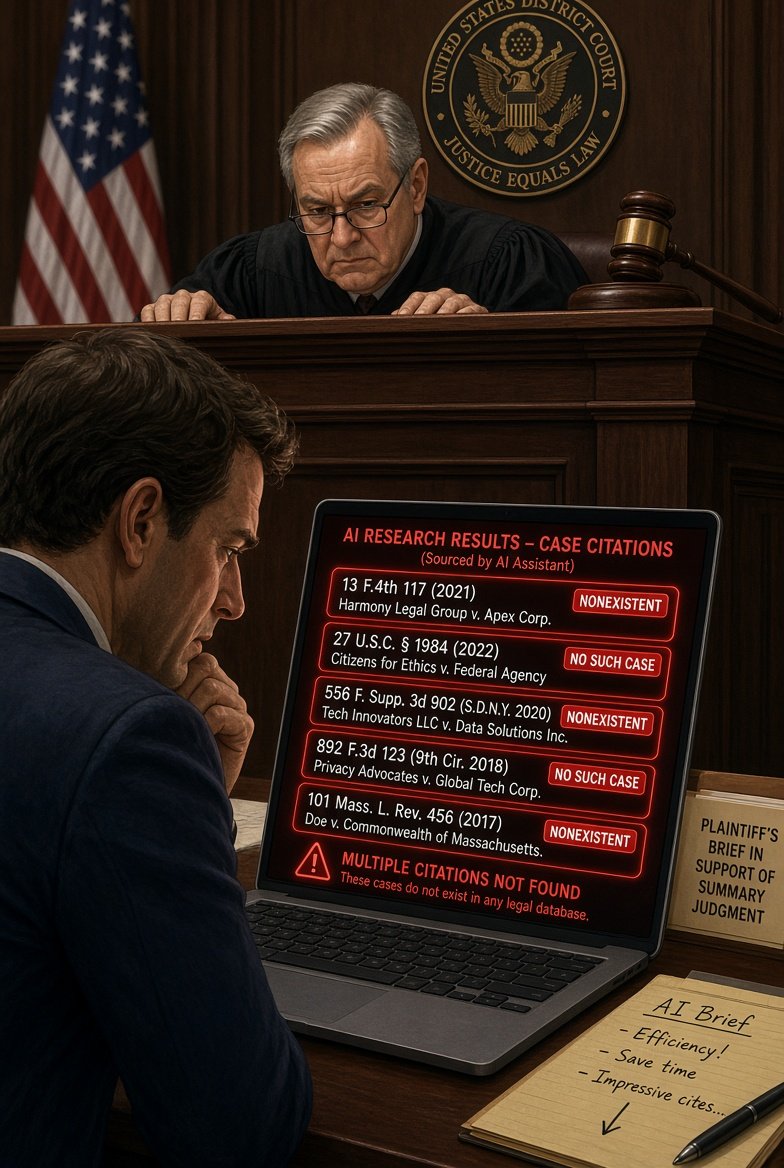
It happened in August, after attorney Eric Khodadian discovered that motions filed on State Farm’s behalf in a Los Angeles home-damage case cited cases that don’t exist, quotes that don’t exist, and holdings that don’t exist. The firm’s lead trial counsel, Kenneth Katel, apologized to the court. A colleague, Jacquelene Robinson, was the one who actually got fined, $999.99, by Judge Elizabeth Bradley, for filing seven citations that simply aren’t real.
Nine hundred and ninety-nine dollars and ninety-nine cents is a strange number for a sanction, and also beside the point. The point is that this keeps happening, at a scale that’s stopped being anecdotal.
Legal researcher Damien Charlotin’s hallucination database, which tracks court decisions where AI fabrication is confirmed or clearly implied, now sits above 2,000 cases worldwide, nearly 1,400 of them in the US alone. Lawyers account for 812 of those. Pro se litigants account for more, which complicates the tidy narrative that this is purely a professional malpractice story. But 812 is still a lot of people with bar licenses who should know better.
Some of them work at firms that really should know better. In early September, a D.C. appeals court struck a brief and referred counsel to the bar after finding four fabricated cases, filed on behalf of Deutsche Bank by a firm with the resources, presumably, to check a citation before it goes to a federal appellate panel. Legal commentator Eugene Volokh’s reaction, in so many words, was disbelief that a firm representing one of the world’s largest financial institutions could let this slip through.
So Which Is It?
Is the technology failing lawyers, or are lawyers failing the technology? The honest answer is neither, framed that way.
BigLaw isn’t resisting AI. A Citi survey of major firms found two-thirds report associates using AI daily, and more than half say the same about partners. The tools are everywhere.
What isn’t everywhere is the boring, unglamorous verification infrastructure that’s supposed to sit on top of them, the workflow discipline that catches a fake case before it reaches a judge instead of after.
The Billable Hour Problem
There’s a structural reason for that gap, and it has less to do with lawyers being careless than with what they’re paid to do.
Roughly 90% of legal fees still run on the billable hour, according to BARBRI research published this August. If AI turns a 40-hour document review into a four-hour one, and you bill by the hour, you’ve just made your own labor cheaper to sell.
Am Law 100 revenue still climbed 13% in 2025, to nearly $179 billion, even as adoption surged, mostly because firms funneled the productivity gains into higher effective rates and expanded scope rather than into the kind of rigorous check-and-verify process that prevents a Deutsche Bank situation.
Buying the AI license is easy. Rebuilding the firm’s economics and workflow around what that license actually does is the part nobody’s incentivized to rush.
A Market Built on the Gap
That gap has become its own market. Telon, founded this year by former PwC partner Lewis Bretts and ex-SYKE executive Tom Mellor, just landed select-partner status in OpenAI’s new partner network, embedding ex-attorneys as “legal engineers” inside firms to configure models and actually train staff on daily use.
Bretts has been blunt that adoption, not capability, is the bottleneck. OpenAI wants 300,000 of these consultants certified by year’s end. That’s a lot of people whose entire job is doing the change-management work BigLaw hasn’t gotten around to doing itself.
The Paralegal Squeeze
Meanwhile, the layer of the profession best equipped to be that verification check, paralegals, is exactly where the automation pressure lands hardest.
Document review and first-pass drafting, the highest-exposure tasks by any honest accounting, are also the tasks paralegals used to spend the most hours on. Citation-checking and judgment calls are the parts everyone agrees still need a human.
Firms are automating the former faster than they’re investing in the latter.
None of this means the models are broken. It means the profession bought a faster car before it rebuilt the brakes, and is now surprised when it keeps hitting things.