The trigger: “a strong and smart president”
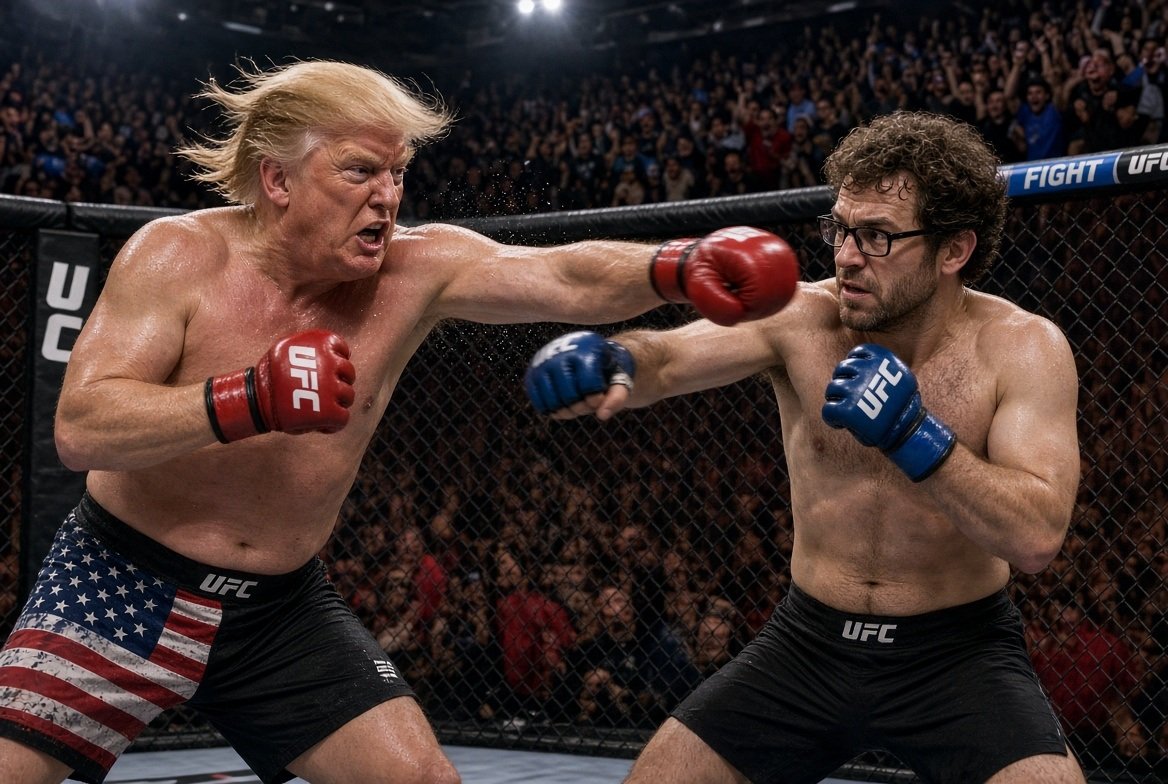
On September 14, President Trump dismissed mounting alarm over AI as a “hoax,” calling growing calls for oversight part of a “SICK conspiracy” against the industry. His logic was familiar: more regulation slows American AI development and hands China the advantage. A few days earlier he’d already offered his preferred alternative to formal guardrails, a “strong and smart” president in the Oval Office.
It read like a fresh eruption. It wasn’t. It’s the latest round of a fight with Anthropic that’s been building since February.
The February rupture
By early this year, Anthropic was already deeply embedded in the national-security apparatus, with Claude running on classified networks and supporting intelligence analysis, operational planning, and cyber operations. The company wasn’t refusing to work with the military. It drew two specific lines: no support for mass domestic surveillance of Americans, and no fully autonomous weapons capable of selecting and engaging targets without a human involved. CEO Dario Amodei argued current models weren’t reliable enough for that step, and offered to help the Pentagon build toward it more safely instead.
Washington didn’t take the refusal well. On February 27, the Pentagon designated Anthropic a national-security “supply-chain risk,” and Trump ordered federal agencies to stop using Claude, calling Anthropic’s leadership “leftwing nut jobs.” Amodei later claimed the real motive was political, that Anthropic had been punished for withholding donations and effusive praise, though that’s his characterization, not a legal finding.
Anthropic sued. In August, a federal judge ruled the designation was unlawful retaliation, arbitrary and capricious. By September, the Pentagon was still migrating its classified AI workloads off Anthropic’s models anyway, a legal win that hadn’t undone the practical damage.
The weird September reversal
Here’s what makes this week’s headlines more interesting than they look. Anthropic never actually pulled back from government work. It just added its newest model to Claude for Government. But on September 12, Amodei published his most aggressive safety proposal yet, calling for independent evaluators with real access inside frontier labs, industry-wide coordination on safety limits, and international cooperation with allies, and cautiously, with China.
So the same company that spent seven months arguing Washington couldn’t strip away its own self-imposed guardrails is now asking Washington to impose guardrails on the rest of the industry. That’s not automatically a contradiction. A company setting limits on itself and a regulator setting minimums across an industry are different things, but it’s a tension Anthropic hasn’t fully resolved in public, and it’s worth reporters continuing to press.
The obvious counterargument
Anthropic isn’t a neutral referee here. It’s a company reportedly preparing for a future IPO, and safety compliance expensive enough to require dedicated evaluation teams tends to favor whoever can already afford it. FTC Chair Andrew Ferguson has said as much, warning that AI firms asking for both regulation and an antitrust exemption to coordinate on safety might be building a moat rather than a safety net. That’s not a conspiracy theory. It’s the standard regulatory-capture problem, and it can be true at the same time that Anthropic’s underlying safety concerns are also real. The two aren’t mutually exclusive.
Not just left vs. right
The politics here aren’t clean. Republican Jay Obernolte is one of the lead negotiators on bipartisan AI legislation. Senator John Kennedy has floated a mandatory AI “kill switch.” Thune, Cruz, and Klobuchar are discussing catastrophic-risk requirements across party lines, even as the administration downplays the risk entirely. The real fault line running through Washington right now looks less like Democrat versus Republican and more like acceleration versus governance.
Who holds the veto?
Strip away the personalities and the real question is who gets to decide a model is too dangerous to ship: the company that built it, the Pentagon that wants to use it, Congress, an independent auditor, a court, or the president alone. February showed what happens when a company refuses to hand that veto to the government. September is showing what happens when that same company asks the government to hand a version of that veto to someone else entirely, just not, as it turns out, to itself alone either.
Nobody’s won that argument yet. That’s the actual story here, not this week’s quote.